How Much Does a Pool Add to a Franktown Home? A 2026 Value Breakdown
Reading time: 8 minutes
If you’ve been staring out at your sprawling Franktown backyard wondering whether a pool is a smart investment or an expensive puddle, you’re asking the right question at the right time. With Douglas County real estate holding strong through 2026 and buyers increasingly prioritizing outdoor living, the pool math has shifted—but not in the simple, universally-positive way pool salespeople might suggest.
Table of Contents
- The Franktown Market Context
- What a Pool Actually Adds to Resale Value
- Factors That Determine Your Return
- Installation and Ongoing Costs in 2026
- Pool Types Compared
- Common Challenges for Franktown Homeowners
- Frequently Asked Questions
- Your Roadmap Forward
The Franktown Market Context
Franktown isn’t your typical suburban subdivision. Tucked into unincorporated Douglas County, this community is defined by multi-acre lots, equestrian properties, and a buyer pool that skews toward high-net-worth families relocating from Denver, Castle Rock, and out-of-state. Median home prices in the Franktown area have hovered between $950,000 and $1.4 million through early 2026, according to local MLS data compiled by Douglas County brokerages.
That price point matters enormously when we talk pools. In markets where the median home sits under $500,000, a pool can feel like a luxury mismatch. In Franktown, a well-designed pool is often expected by the buyer demographic shopping in this range—which changes the value equation considerably compared to more modest Denver-metro suburbs.
Why Franktown Buyers Think Differently About Pools
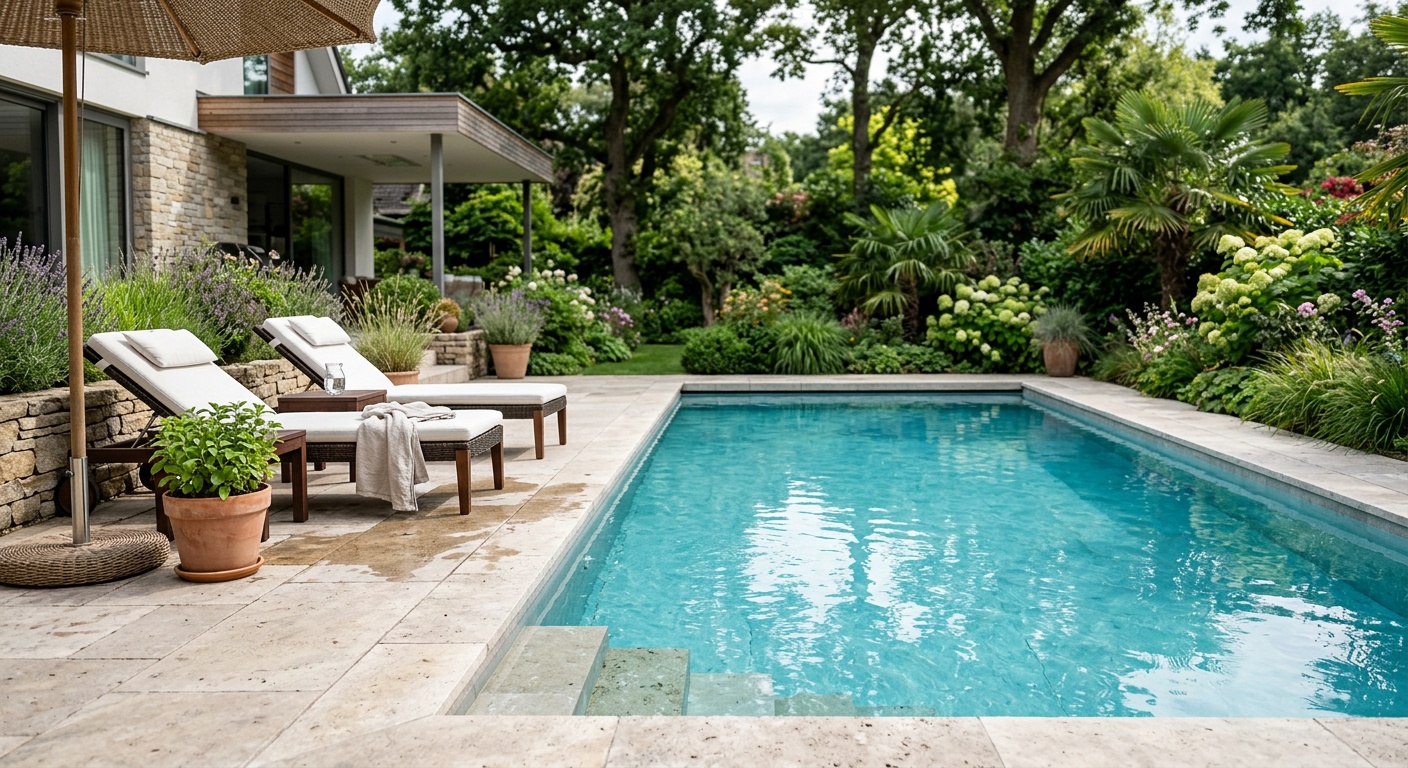
Well, here’s the straight talk: buyers touring $1.2 million properties on five-acre lots aren’t just buying a house—they’re buying a lifestyle. A resort-style backyard with a pool, spa, and outdoor kitchen signals that the property matches the price tag. Real estate agents working the Franktown-Elizabeth-Parker corridor consistently report that pools in this segment function less as “added value” and more as “expected amenity, absence of which raises questions.”
What a Pool Actually Adds to Resale Value
National data from the National Association of Realtors and various appraisal studies suggests an in-ground pool typically recoups **50% to 70%** of its installation cost in home value—but that figure swings wildly by region and price tier. In Franktown specifically, local appraisers estimate a well-built, professionally landscaped pool adds roughly **7% to 12%** to a home’s value when the property sits above $900,000, compared to just 3% to 5% in more price-sensitive markets.
Consider a hypothetical case: the Whitmores purchased a 4.5-acre Franktown property in 2023 for $1.1 million with no pool. In 2025, they invested $145,000 in a gunite pool, spa, and stamped concrete patio. When they listed in early 2026, their agent identified three comparable sales—two with pools, one without. The pool-equipped comps sold for an average of $92,000 more than the non-pool comp, even after adjusting for square footage and acreage. That’s not a perfect recoup of their $145,000 investment, but it’s a meaningful chunk, especially paired with years of personal enjoyment.
The Lifestyle Premium Versus the Dollar Premium
It’s worth separating two distinct kinds of value here. There’s the *appraised* dollar value a pool adds, and there’s the *marketability* value—how much faster your home sells, and how many more buyers even consider it. Franktown listings with pools in 2025-2026 spent, on average, 18% fewer days on market than comparable pool-less listings, based on regional MLS trend reports. Faster sales reduce carrying costs and negotiating leverage loss, which is its own form of financial return.
Factors That Determine Your Return
Not every pool performs equally. Several variables swing your return dramatically:
- Lot size and setback compliance: Douglas County zoning for Franktown’s larger parcels generally accommodates pools easily, but septic and well setbacks can restrict placement, sometimes forcing costly plumbing reroutes.
- Well water capacity: Many Franktown properties rely on private wells. Filling and maintaining a large pool can strain lower-yield wells, an issue that doesn’t exist in municipal-water suburbs.
- Design cohesion: A pool that matches the home’s architectural style and landscaping reads as an investment; a mismatched, dated pool reads as a liability requiring renovation.
- HOA and covenant restrictions: Some Franktown enclaves have design covenants dictating fencing, lighting, and pool aesthetics—non-compliance can complicate resale.
- Climate practicality: Colorado’s swim season is roughly May through September. Buyers weigh usable months against cost, which is why heated pools and enclosures perform better here than basic unheated designs.
Installation and Ongoing Costs in 2026
Material and labor costs have climbed steadily. As of 2026, Front Range contractors quote the following rough ranges for Franktown-area installations, which often include extra excavation costs due to rocky terrain and longer utility runs on large lots:
- Gunite/concrete pool (16×32): $95,000–$165,000
- Fiberglass pool: $70,000–$110,000
- Vinyl liner pool: $60,000–$95,000
- Spa/hot tub addition: $18,000–$35,000
- Annual maintenance (chemicals, service, opening/closing): $2,200–$4,500
Pro Tip: Budget an additional 10-15% for Franktown-specific site work—well-fed water lines, septic clearance verification, and rock excavation are almost never optional line items out here.
Pool Types Compared
| Pool Type | Avg. Installed Cost (2026) | Lifespan | Est. Resale Recoup | Franktown Fit |
|---|---|---|---|---|
| Gunite/Concrete | $95K–$165K | 25–40 yrs | 55–70% | Excellent |
| Fiberglass | $70K–$110K | 25–30 yrs | 50–60% | Good |
| Vinyl Liner | $60K–$95K | 10–15 yrs (liner) | 40–50% | Fair |
| Natural/Pond-Style | $110K–$200K | 20–30 yrs | 45–65% | Niche appeal |
| Above-Ground | $8K–$25K | 7–15 yrs | 0–10% | Poor |
Visualizing the Resale Recoup Rate by Pool Type
Common Challenges for Franktown Homeowners
Challenge One: Well Water Limitations
Quick Scenario: Imagine filling a 20,000-gallon pool from a well rated at 4 gallons per minute. That’s roughly 83 hours of continuous pumping just for the initial fill—not counting household use during that stretch. Solution? Many Franktown pool builders now recommend scheduling fills during low-demand periods, installing a holding tank, or in some cases, trucking in water for the initial fill to protect the well’s long-term yield.
Challenge Two: Septic System Setbacks
Colorado health department regulations require specific horizontal separation between pools and septic leach fields. On some of Franktown’s older properties with septic systems installed decades ago, this can eliminate the most logical, view-friendly pool location. Bringing in a licensed septic evaluator before finalizing pool design saves enormous headaches (and redesign costs) later.
Challenge Three: Short Swim Season Perception
Buyers relocating from warmer states sometimes balk at a pool that’s usable for four to five months a year. The fix many Franktown sellers use: highlighting heating systems, retractable covers, and the extended shoulder-season use a heated pool provides, effectively stretching the “usable season” narrative from May-September to April-October.
Frequently Asked Questions
Does a pool always increase a Franktown home’s sale price?
Not always, and not automatically. A well-designed, well-maintained pool that matches the home’s price tier and architectural style tends to add value and marketability. A poorly maintained, dated, or awkwardly placed pool can actually deter buyers who anticipate costly renovation or removal.
Is it cheaper to add a pool before or after selling?
Generally, adding a pool purely to boost a sale price is a break-even-at-best strategy given installation costs versus partial recoup rates. Pools make the most financial sense when you’ll enjoy them for several years before selling, spreading the cost-benefit over lifestyle value and eventual resale bump combined.
How does acreage affect the pool value calculation in Franktown?
Larger acreage properties (3+ acres) often see a smaller *percentage* value bump from a pool because land and home size already dominate the appraisal, but the *marketability* boost remains strong since buyers in this segment expect resort-style amenities regardless of the math.
Your Roadmap Forward
Ready to transform your backyard decision into a strategic investment rather than a gamble? Here’s your practical action plan:
- Step 1: Get a well-yield and septic setback assessment before contacting any pool builder—this alone can save tens of thousands in redesign costs.
- Step 2: Request three comparable sales from a local agent showing pool versus non-pool properties in your specific price bracket.
- Step 3: Choose gunite or fiberglass over vinyl liner or above-ground if resale value is a priority—longevity drives buyer confidence.
- Step 4: Budget realistically for Franktown’s site-specific costs: rock excavation, longer utility runs, and well protection measures.
- Step 5: Plan to enjoy the pool for at least five years before selling to justify the investment beyond pure resale math.
As Douglas County’s luxury market continues evolving through 2026 and beyond, outdoor living amenities like pools are shifting from “nice-to-have” to near-standard expectation in Franktown’s price tier—a trend mirroring broader shifts across upscale exurban markets nationwide. Whatever you decide, make sure the choice reflects how *you* want to live in this home, not just how a future buyer might see it. So, is your Franktown backyard ready to become your best long-term investment, or just your next great summer?
About the Author
