
Understanding Assessed Value vs Market Value for Franktown Homes
Reading time: 8 minutes
Ever opened your Douglas County property tax notice and thought, “Wait, my house is worth that much?” If you own a home in Franktown, Colorado, you’ve probably experienced this exact moment of confusion. The number on that envelope rarely matches what your real estate agent quoted you—and that gap between assessed value and market value trips up even seasoned homeowners.
Let’s clear the fog. Whether you’re budgeting for 2026 property taxes, considering a refinance, or prepping to sell your Franktown property, understanding these two distinct valuations isn’t optional—it’s essential financial literacy for rural Douglas County homeownership.
Table of Contents
- The Basics: Two Numbers, Two Purposes
- Why Franktown Is a Unique Case
- Assessed vs Market Value: Side-by-Side
- Common Challenges Homeowners Face
- How to Appeal Your Assessment
- Frequently Asked Questions
The Basics: Two Numbers, Two Purposes
Here’s the straight talk: assessed value and market value serve completely different masters. Market value is what a willing buyer would pay a willing seller in today’s competitive marketplace—it’s fluid, emotional, and shaped by everything from school district reputation to how many acres of ponderosa pine surround the property. Assessed value, on the other hand, is a bureaucratic calculation used strictly for property tax purposes, determined by the Douglas County Assessor’s Office.
In Colorado, residential properties are assessed at a percentage of their “actual value” (which closely mirrors market value), and that percentage—called the assessment rate—is set by the state legislature. For 2026, residential assessment rates hover around 6.7% to 7.15% depending on legislative adjustments and any temporary tax relief measures passed in response to rising home values across the Front Range.
How the Formula Actually Works
The math looks like this: Actual Value × Assessment Rate = Assessed Value. Then, your local mill levy is applied to the assessed value to calculate your actual tax bill. So if your Franktown home has an actual (market-based) value of $850,000 and the assessment rate is 6.9%, your assessed value would be roughly $58,650. That’s the figure your mill levy gets applied to—not the full $850,000.
Reassessment Cycles in Douges County
Colorado reassesses properties every two years, with the most recent cycle reflecting sales data from mid-2024 through mid-2025, now driving your 2026 tax bill. This lag matters enormously in a market like Franktown’s, where large-lot equestrian properties and custom-built homes can appreciate—or occasionally correct—faster than the assessment cycle can track.
Why Franktown Is a Unique Case
Franktown isn’t your typical suburban subdivision. With sprawling 2-to-35-acre parcels, a mix of historic ranch properties and newer custom builds, and zero municipal incorporation (it’s unincorporated Douglas County), valuation here gets genuinely tricky. Comparable sales are harder to find, and assessors often rely on broader regional data that doesn’t always capture the nuance of a specific gravel road or well-water system.
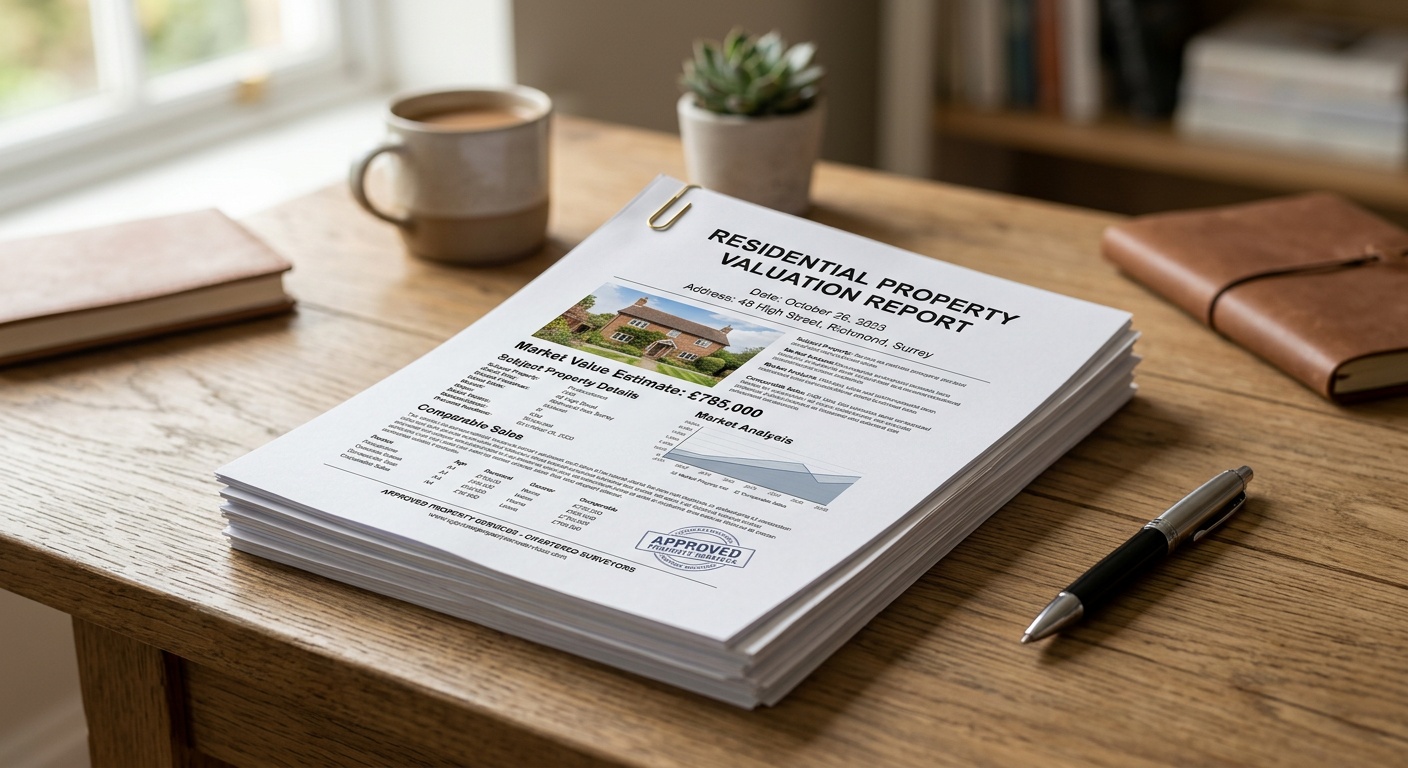
Take the case of a family we’ll call the Petersons (details changed for privacy), who purchased a 5-acre horse property in Franktown in early 2023 for $920,000. By their 2026 reassessment notice, the county listed their actual value at $1.05 million—reflecting appreciation trends from comparable equestrian properties. Yet when they had an independent appraisal done for a home equity line of credit, the appraiser landed at $980,000. Neither number was “wrong”—they simply measured different things through different lenses, using different comparable sale sets and different effective dates.
According to Colorado Division of Property Taxation guidance, assessors must use mass appraisal techniques applied uniformly across a neighborhood or area, whereas a private appraiser tailors the analysis specifically to your property’s condition, upgrades, and hyper-local comparables. As one Douglas County assessment official put it during a 2025 public forum: “We’re valuing thousands of parcels with limited staff. We’re accurate on average, but any single property can deviate from that average.”
Assessed vs Market Value: Side-by-Side
Here’s a comparative snapshot illustrating how these values typically diverge for Franktown-area properties in 2026:
| Metric | Assessed Value Basis | Market Value Basis |
|---|---|---|
| Purpose | Property tax calculation | Buying, selling, refinancing |
| Update Frequency | Every 2 years (biennial cycle) | Real-time, shifts with market conditions |
| Data Source | Mass appraisal, regional sales data | Individual appraisal, active listings, buyer demand |
| Typical Franktown Variance | Often 5-12% below current market | Reflects true 2026 buyer sentiment |
| Who Sets It | Douglas County Assessor’s Office | Market forces, licensed appraisers, agents |
Visualizing the Gap: A Sample Franktown Property
Below is a simplified breakdown of how one 4-acre Franktown property’s valuation figures compared in early 2026 (values in thousands of dollars):
Note: The assessed value bar looks small because it represents only the taxable portion (roughly 6.9% of actual value)—not a reflection of your home’s real worth.
Common Challenges Homeowners Face
Quick scenario: Imagine you’re refinancing your Franktown home and your bank-ordered appraisal comes back $150,000 higher than your county assessed value. Should you panic? Absolutely not—but you should understand why this happens.
Challenge 1: The Lag Effect
Because Colorado’s assessment cycle only updates every two years, a hot market can leave assessed values trailing well behind reality—or, in a cooling market, assessed values might overshoot current conditions. Franktown’s semi-rural charm has drawn steady buyer interest from Denver-area professionals seeking space and privacy, which occasionally causes assessed values to lag 8-10% behind live market pricing.
Challenge 2: Inconsistent Comparables
Large-acreage properties are notoriously hard to compare. A 3-acre parcel with a barn and irrigation rights isn’t equivalent to a 3-acre parcel that’s mostly scrub oak. Mass appraisal systems sometimes struggle with these nuances, leading to assessed values that feel disconnected from a property’s actual character.
Challenge 3: Emotional Sticker Shock
Many homeowners conflate a rising assessed value with an automatic tax increase, causing unnecessary anxiety. In reality, mill levy adjustments and state-level tax relief bills (like those passed in 2023-2025 sessions) can offset assessed value increases, meaning your actual tax bill might rise far less than the assessed value suggests—or occasionally not at all.
How to Appeal Your Assessment
If your 2026 Notice of Valuation seems disconnected from reality, you have options. Here’s your practical roadmap:
- Review your Notice of Valuation carefully. These typically arrive in early May for Douglas County residents.
- Gather comparable sales. Look for similar acreage, similar improvements, and sales within the assessor’s data window (mid-2024 to mid-2025).
- File your protest by the June deadline. Douglas County typically requires protests by June 8th or the next business day.
- Consider a professional appraisal. For high-value or unusual properties, a $500-$700 appraisal can strengthen your case significantly.
- Attend the hearing prepared. Bring photos, repair estimates, and comparable listings—not just complaints about your tax bill.
Pro Tip: Appeals succeed most often when they focus on factual valuation errors—incorrect square footage, missing damage, or flawed comparables—rather than general arguments about affordability or tax burden.
Frequently Asked Questions
Does a higher assessed value mean my taxes will definitely go up?
Not necessarily. Your tax bill depends on both assessed value and the mill levy set by local taxing authorities (schools, fire district, county). If your assessed value rises but the mill levy drops, your bill could stay flat or even decrease. Always check the full calculation, not just the assessed value line.
Can I use my county assessed value when listing my Franktown home for sale?
You can reference it, but savvy buyers and agents will rely on a comparative market analysis (CMA) or professional appraisal instead. Assessed value is typically lower than true market value and shouldn’t be used as your primary pricing benchmark.
How often does Douglas County update Franktown property assessments?
Colorado law mandates biennial reassessment. The current cycle affecting 2026 tax bills reflects sales data collected through mid-2025, meaning the next full reassessment will incorporate sales through mid-2027, impacting 2028 tax notices.
Your Franktown Valuation Roadmap Forward
Understanding the difference between assessed and market value isn’t just academic—it’s a financial skill that pays dividends every time you interact with your property, whether that’s tax season, refinancing, or eventually selling.
- Know your numbers: Pull both your latest county assessment and a recent CMA from a local agent to see where you stand.
- Mark your calendar: Notices of Valuation arrive each May in odd-numbered reassessment years—2027 is next.
- Don’t panic over headlines: A rising assessed value doesn’t guarantee a tax spike; check mill levies before reacting.
- Build a paper trail: Keep appraisal reports and improvement records handy for future appeals or sales.
- Consult locally: Franktown’s unique rural characteristics mean generic Denver-metro advice doesn’t always apply—work with professionals who know the area.
As Douglas County’s rural fringe continues attracting buyers seeking space and privacy, the gap between assessed and market value will likely remain a persistent talking point for homeowners through 2027 and beyond. So, the next time that valuation notice lands in your mailbox, will you see it as confusing paperwork—or as a strategic opportunity to understand your property’s real financial story?
About the Author
