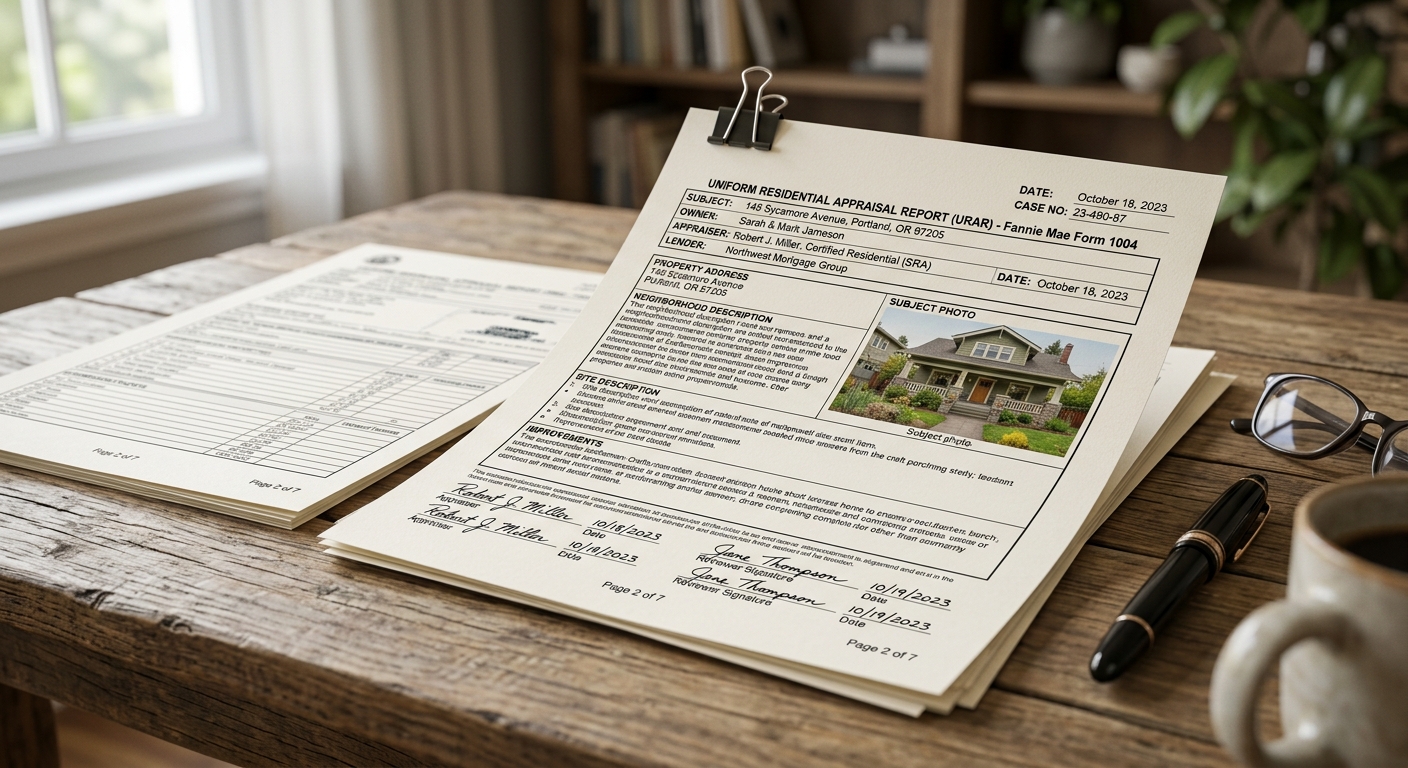
How to Find the Fair Market Value of Your Franktown Home in 2026
Reading time: 9 minutes
Table of Contents
- Why Fair Market Value Matters in Franktown
- Understanding the Franktown Market in 2026
- Four Ways to Determine Your Home’s Value
- Comparing Valuation Methods
- Common Challenges (and How to Solve Them)
- Real Examples from Franktown Sellers
- Your Roadmap Forward
- FAQs
Ever pulled up an online home value estimator, seen a number, and thought “wait, that can’t be right”? If you own property in Franktown, Colorado, you’re not imagining things. This unincorporated slice of Douglas County—known for its large lots, equestrian properties, and proximity to Castle Rock and Parker—doesn’t fit neatly into the algorithms that power most automated valuation tools. Getting an accurate fair market value here requires a bit more nuance than typing an address into a search bar.
Why Fair Market Value Matters in Franktown
Fair market value (FMV) is the price a willing buyer would pay a willing seller in an open market, with neither party under pressure to act. It’s not the same as your tax assessment, your insurance replacement value, or the number an app spits out at 2 a.m. In Franktown, where median lot sizes often exceed 2 acres and homes range from 1970s ranch-style properties to newly built luxury estates, that distinction carries real financial weight.
Here’s the straight talk: overpricing your Franktown home by even 5% can add 30-45 extra days on market, according to 2026 regional MLS trend data from the Denver Metro Association of Realtors. Underpricing, on the other hand, can leave tens of thousands of dollars on the table in a market where well-maintained acreage properties are increasingly scarce.
The Franktown Difference
Unlike a subdivision in Highlands Ranch where hundreds of nearly identical homes sell every year, Franktown properties are inherently harder to compare. Well and septic systems, horse facilities, outbuildings, and irregular parcel shapes mean two homes on the same road can differ in value by six figures. This is exactly why generic online estimates so frequently miss the mark here.
Understanding the Franktown Market in 2026
As of early 2026, Douglas County’s rural and semi-rural segment—which includes Franktown, Sedalia, and parts of unincorporated Elizabeth—has shown resilience despite broader interest rate fluctuations. Local brokerage data suggests the median sale price for Franktown single-family homes sits near $975,000, up modestly from 2025, while inventory remains tight, typically under 45 active listings at any given time.
Several factors are shaping value right now:
- Limited inventory — Large-lot zoning restricts new construction density, keeping supply naturally constrained.
- School district desirability — Douglas County School District’s Franktown-area schools continue to attract families relocating from Denver and Aurora.
- Commute flexibility — Continued hybrid work patterns keep demand steady for properties 35-45 minutes from downtown Denver.
- Water rights and well permits — Increasingly scrutinized by buyers, directly impacting perceived and appraised value.
Four Ways to Determine Your Home’s Value
1. Automated Valuation Models (AVMs)
Tools from major real estate portals generate instant estimates using algorithms and public data. They’re fast and free, but in Franktown, their error margin can swing 10-20% because of sparse comparable sales and unique lot characteristics. Think of an AVM as a conversation starter, not a final answer.
2. Comparative Market Analysis (CMA)
A local agent pulls recent sales of genuinely comparable properties—similar acreage, similar outbuildings, similar well/septic setups—and adjusts for differences. A skilled Franktown-focused agent will know, for instance, that a property backing to Cherry Creek State Park land often commands a premium of 8-12% over a similar home without that adjacency.
3. Professional Appraisal
An appraiser licensed in Colorado provides a formal valuation, often required for refinancing or estate purposes. Expect to pay $650-$950 for a rural property appraisal in 2026, higher than a standard suburban appraisal because of the extra time needed to assess acreage, outbuildings, and water rights.
4. Recent Comparable Sales Analysis (Manual Deep Dive)
For the DIY-minded homeowner, pulling actual closed sales (not just listings) from the Douglas County Assessor’s public records and cross-referencing with MLS sold data gives a grounded, evidence-based figure. This method takes longer but often produces the most defensible number if you’re negotiating directly.
Comparing Valuation Methods
| Method | Typical Cost | Turnaround Time | Accuracy in Franktown | Best Use Case |
|---|---|---|---|---|
| AVM (Online Estimate) | Free | Instant | Low-Moderate (±15%) | Quick curiosity check |
| Agent CMA | Free (with listing intent) | 1-3 days | High (±5%) | Selling or listing prep |
| Professional Appraisal | $650-$950 | 5-10 days | Very High (±2-3%) | Refinance, estate, legal needs |
| Manual Sales Analysis | Free (time investment) | Several hours | Moderate-High (±7%) | Informed negotiation prep |
What Actually Moves the Needle: A Visual Breakdown
Based on 2026 appraisal data from Douglas County rural properties, here’s roughly how much weight each factor carries when determining final value adjustments:
Common Challenges (and How to Solve Them)
Challenge 1: Sparse Comparable Sales
With fewer transactions per year than a dense suburb, finding true “apples-to-apples” comps is tough. Solution: Expand your search radius to include Sedalia and parts of Elizabeth with similar acreage and rural infrastructure, then adjust for location differences rather than ignoring the data entirely.
Challenge 2: Overvaluing Personal Improvements
Homeowners often assume a $60,000 barn addition adds $60,000 in value. In reality, specialized improvements like equestrian facilities typically recoup 40-60% of cost in resale value unless the buyer pool specifically wants that feature. Solution: Get a realistic appraisal before assuming full cost recovery.
Challenge 3: Ignoring Well and Water Rights Documentation
Buyers in 2026 are more educated about Colorado water law than ever, and missing well permit paperwork can stall a sale or trigger lowball offers. Solution: Pull your well permit records from the Colorado Division of Water Resources before listing.
Real Examples from Franktown Sellers
Consider the Whitfield family, who listed their 5-acre property on Bendemeer Road in late 2025. Their AVM estimate suggested $890,000. A licensed appraiser, accounting for a recently renovated kitchen and a four-stall barn, valued it at $1.04 million. They sold at $1.02 million within 28 days—proof that automated tools underestimated value by nearly 15%.
Contrast that with a seller on Perry Park Road who priced based purely on an online estimate without adjusting for a shared well agreement with a neighboring parcel. The property sat for 97 days before a price correction and disclosure update finally attracted a serious offer—a costly lesson in transparency.
“In Franktown, the properties that sell fastest and closest to asking price are the ones where sellers did their homework on comps and disclosed water and septic details upfront,” notes a Douglas County-based broker with over a decade of rural property experience.
Your Roadmap Forward
Finding the true fair market value of your Franktown home isn’t about chasing a single perfect number—it’s about triangulating multiple data sources until a confident range emerges. Here’s your practical checklist:
- Start broad: Pull 2-3 AVM estimates to establish a rough range.
- Get local: Request a CMA from an agent who has closed at least three Franktown-area transactions in the past 12 months.
- Document infrastructure: Gather well permits, septic inspection records, and any water rights paperwork now, not after an offer comes in.
- Consider an appraisal: Especially if your property has unique features like acreage over 5 acres or specialized outbuildings.
- Reassess seasonally: Rural property values can shift with spring buying season demand, so re-check your estimate every 3-4 months if you’re not selling immediately.
As Douglas County continues to balance growth pressure with preservation of its rural character, Franktown’s large-lot properties are likely to remain a distinct and increasingly valuable niche within the greater Denver market. Understanding your home’s true value today puts you in a stronger position whether you’re selling next month or five years from now.
So, what’s your next move—pulling comps yourself, or picking up the phone to call a local expert who already knows your road?
FAQs
How often should I check my Franktown home’s fair market value?
If you’re not planning to sell, checking once or twice a year is sufficient. If you’re preparing to list within the next 6-12 months, refresh your estimate every quarter, since rural inventory shifts can move values more sharply than in dense suburban markets.
Do online home value estimators work for rural Colorado properties?
They provide a starting point but are frequently off by 10-20% for Franktown properties due to limited comparable sales, irregular lot sizes, and features like wells and outbuildings that algorithms struggle to weigh accurately.
Does acreage always increase my home’s value in Franktown?
Generally yes, but usability matters more than raw size. Five usable, flat, fenced acres often outvalue ten acres of steep or unusable terrain, so buyers and appraisers weigh functional land use heavily in their calculations.
About the Author
